It’s early November, which means most boards are either about to hold their last meeting of the year or have just finished it. Next year’s meeting dates are usually still sitting at “TBC - to be confirmed”.
Then January arrives. The chair or secretary are still chasing dates, someone realises the first meeting clashes with a holiday, and board papers are being pulled together the night before. This is a stressful way to start the year.
A bit of planning now goes a long way!
Start with the dates, not the agenda
Before anything else, get the full year of meeting dates locked in and into everyone’s calendar. It helps to check them against a few things first:
School holidays and public holidays, including Matariki
Your balance date and when your annual report is due
Your AGM
Funding deadlines and reporting dates
Having these at hand while planning the dates means you can plan around them.
Work backwards from each meeting
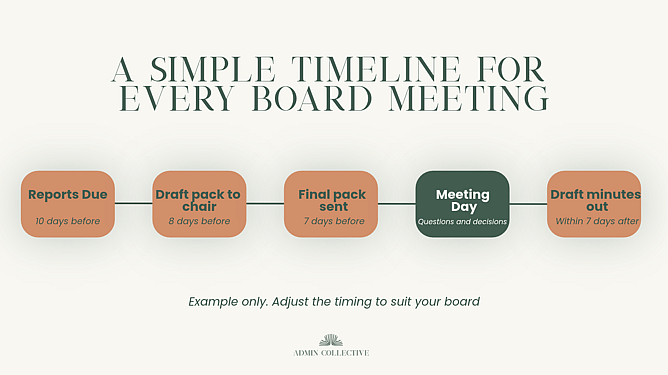
The meeting date is only part of the picture. What else matters is the deadlines behind it. For each meeting, put these dates in the calendars as well:
When reports are due to whoever is compiling the pack
When the draft pack should be ready for the chair to review
When the final pack goes out to the board
When draft minutes will be circulated afterwards
A common practice is to send papers about a week before the meeting and get draft minutes out within a week afterwards. Adjust it to suit your board, but pick a process and stick to it. Boards that do this find papers actually get read, because they arrive with enough time to read them, and the meeting can be spent on questions and clarification rather than recaps.
Decide who owns what
Most late board pack circulation happen because nobody was quite sure whose job it was.
Clarify who prepares each report, if there is no secretary, decide who pulls the pack together, who sends it, and who takes the minutes.
What a good board pack looks like
While you’re planning the year, it’s worth looking at the pack itself. A good board pack is easy to get through, and board members should be able to see at a glance what they need to do with each item.
A solid board pack usually includes:
The agenda first. It should be the first thing people see, with the items in the order you’ll cover them.
Previous minutes. These should be the draft or approved version, ready to confirm.
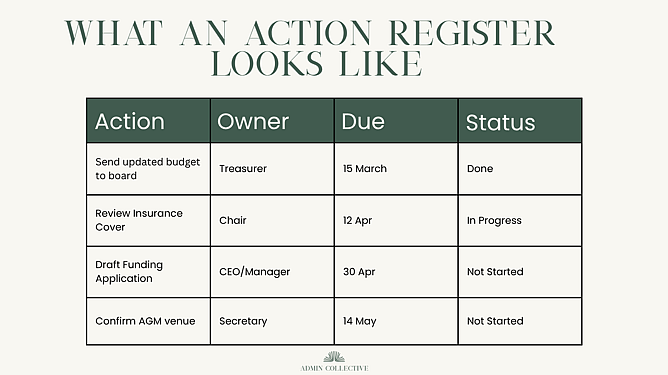
The action register. This shows what was agreed last time and where each item is at.
Chair and CEO or manager reports. Keep these short and focused on what the board needs to know.
The financial report. A clear summary is better than a pile of raw numbers. Include raw numbers if the board would like to see them.
Items for decision. These should be clearly marked, with a short note on what is being asked of the board.
The last point makes the biggest difference. If a paper is for information, say so. If it needs a decision, say so and say what the decision is.
It also helps to keep supporting papers to what is needed. A long pack does not make for a better meeting, and the important items can get buried.
Read the pack before the meeting
Getting the pack out on time only works if it gets read. Reports are sent ahead so board members can read them beforehand, and the meeting is then used to ask questions and clarify anything that is unclear. It is not the time to hear each report read out.
When reports are talked through line by line, meetings run long and the time left for discussion and decisions shrinks. When everyone has read them, the chair can go straight to questions, and the meeting can focus on what needs deciding.
A few small habits make this easier:
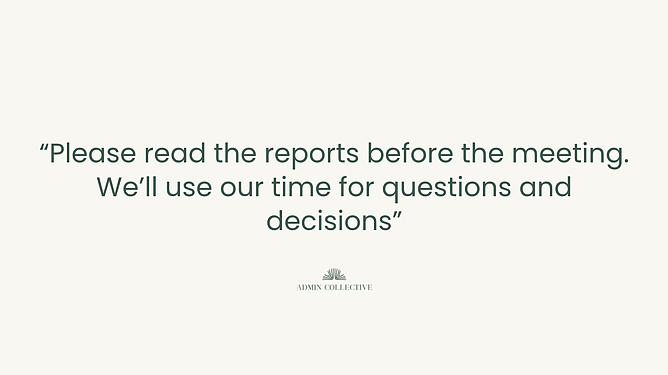
Say it plainly in the cover note of each pack: “Please read the reports before the meeting. We’ll use our time for questions and decisions.”
Ask board members to send any questions through ahead of time where they can, so the report writer comes prepared.
Keep the action register moving
If you only change one thing, make it the action register. Minutes record what was said, but the register is what makes sure things get done. It should be updated after every meeting and included in every pack, so nothing agreed in March is forgotten by June.
A small job now saves a lot later
Setting up your board calendar takes an hour or two, and it takes pressure off every meeting that follows. By the time the first meeting comes round in the new year, the dates are set, everyone knows their deadlines, and the pack has a clear shape.